



Case study
Marked lost in April, signed in August: a 45,000 m³/h explosion-safe dust system for a woodworking plant
An Australian woodworking plant needed a 45,000 m³/h explosion-safe dust system built to the customer’s own layout. The opportunity was marked lost in April and signed in August — brought back not by a price, but by a re-checked air calculation against a drawing the customer had sent us five months earlier.
- Country
- Australia
- Industry
- Woodworking
Why it worked
- Explosion protection was quoted from day one. In a combustible-dust plant, spark detection and isolation are part of the machine, not an accessory. Raising it early told the buyer we understood his hazard.
- Two stages matched the dust. A cyclone in front of the bags is what makes a high-volume woodworking system workable: the coarse fraction never reaches the filter media, so the bags stay on light dust only.
- Waste handling was designed, not defaulted. The five outlet points drop straight into 1-tonne bulk bags on a raised platform, so emptying is a forklift job rather than a shovel job under a hopper.
- We worked to his drawing, not around it. The layout came from the customer; we sized to it and returned a configuration list he could check line by line.
- “Lost” was a CRM field, not a customer decision. The opportunity closed in April; the order came in August. Between those dates we followed up twice — on engineering, not on price.
- The quotation was already in his language. Configuration clauses written as 1.7 Spark detector and 1.8 Single direction valve could be forwarded straight to his own client or inspector.
- Specified brands were settled early. Schneider and Innomotics were confirmed at quotation stage, so brand preference never became a lead-time problem.

Key specifications
| Item | Specification |
|---|---|
| System air volume | 45,000 m³/h |
| Dust capture | Individual hoods on each machine; branch ducts Ø150–Ø400 |
| Main duct | Ø800mm |
| Pre-separator | Cyclone, mounted outdoors with the filter |
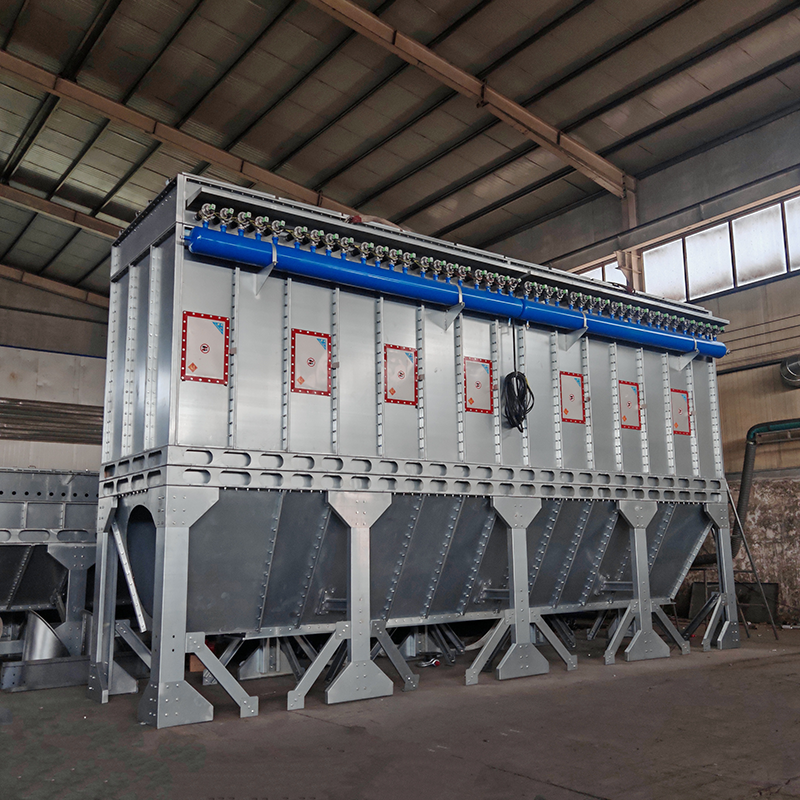
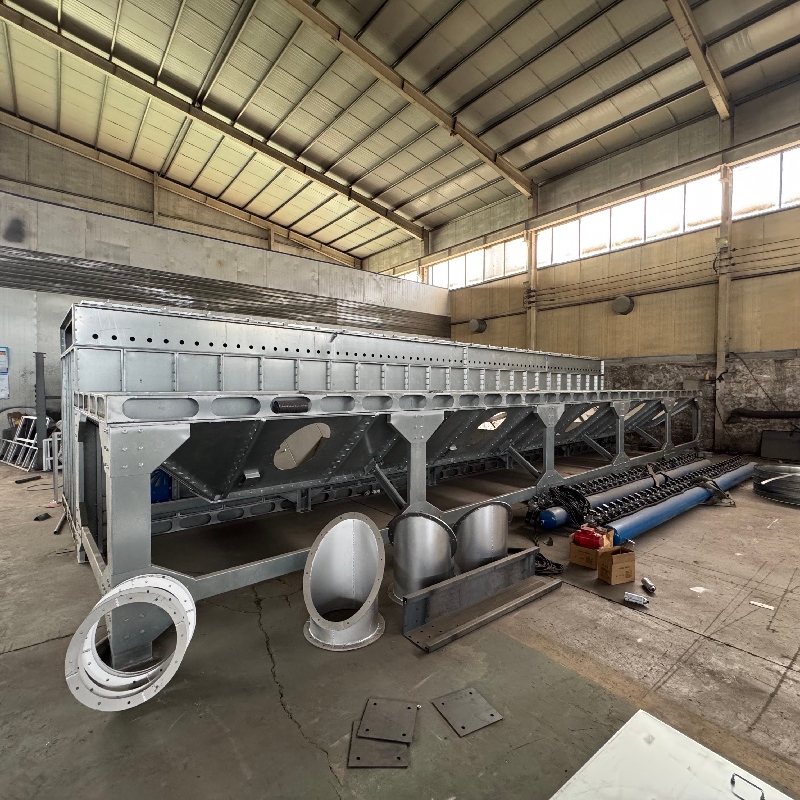
| Filter | Pulse-jet bag filter, 500 bags |
| Cleaning system | 2 air headers × 25 pulse valves = 50 pulse valves |
| Fan | centrifugal, 75 kW |
| Dust discharge | 5 × 300 mm square outlets into 1-tonne bulk bags, plus a screw conveyor |
| Clean-air stack | Ø800mm |
| Access | Raised steel platform (4 m) with guardrail and access ladder |
| Explosion protection | Spark detection; isolation valves on Ø800 and Ø500 ducts; 4 × Ø600 explosion-vent panels |
| Power | 415 V / 50 Hz / 3-phase |
| Controls | Schneider / Innomotics; control cabinet on the platform |
| Installation | Outdoors beside the hall, on a raised steel platform |
What we learned
A CRM status records where an opportunity sat on one particular day. It does not record where the customer is. This one was marked lost in April and signed in August — and what brought it back was not a price. It was a re-checked air calculation against a drawing the customer had sent us five months earlier.
Interactive 3D model
Drag to rotate · Scroll to zoom · View in your space on mobile (AR)
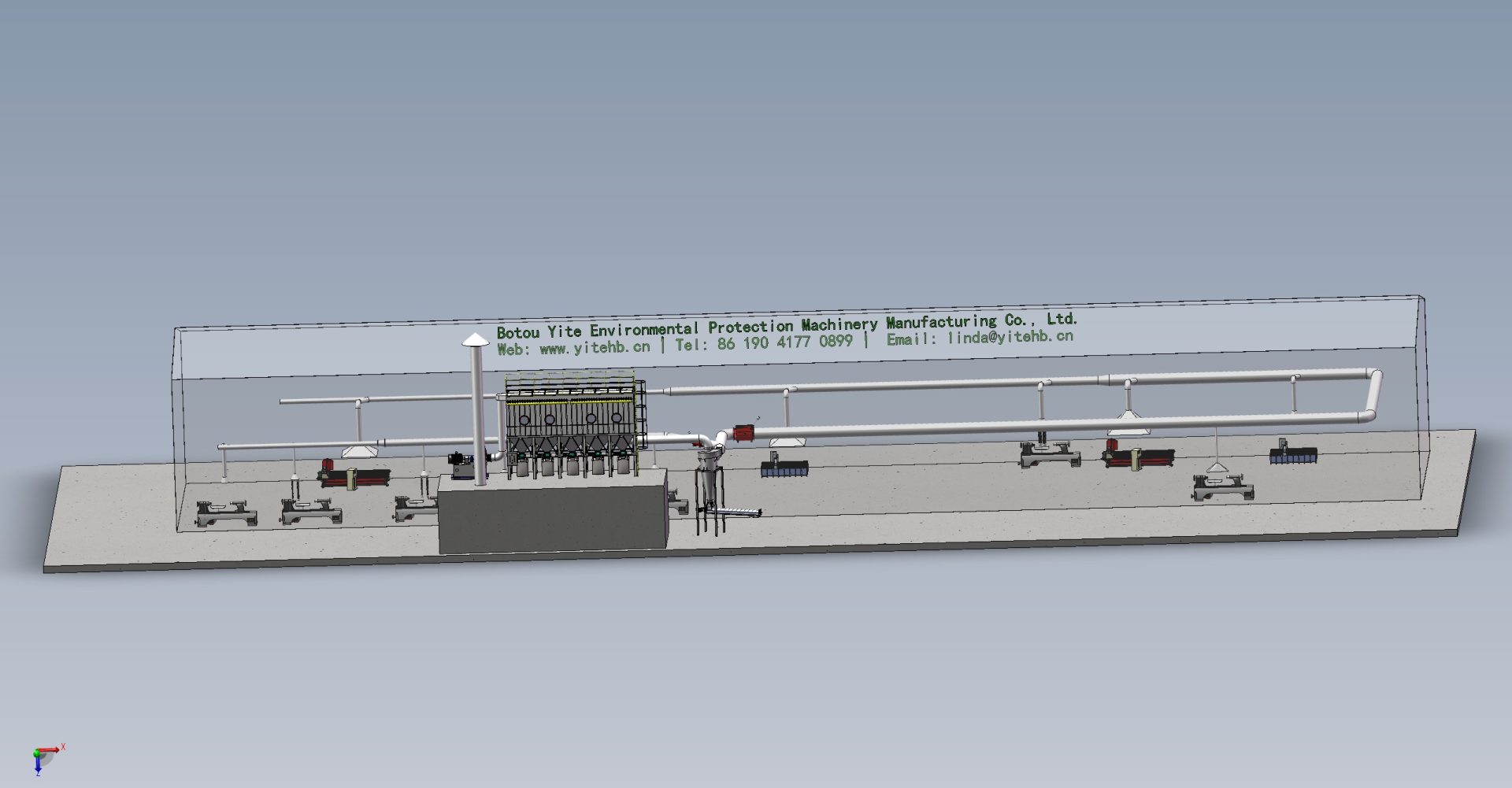
Interactive layout of the delivered system: hoods and branch ducts inside the hall, Ø800 main duct, cyclone pre-separator and 500-bag pulse-jet filter outdoors, screw conveyor, and a 75 kW fan on the clean side — with pipe explosion-isolation valves and explosion-vent panels shown in place.